Topic · 24 tips
Japan Food Etiquette & Konbini Tips
Konbini know-how, restaurant manners and chopstick taboos. Each tip below comes with a short video starring Hako, the written version, a Japanese phrase to try, and links to the official sources we checked.
-
At a Japanese convenience store, ask staff to heat your bento, expect to pay for plastic bags, and put cash on the small tray at the register. Buy your coffee cup at the register before you pour, and if you need yen, 7-Eleven ATMs accept many foreign cards.
Covers: Ask for your bento to be heated · Plastic bags aren't free · Put cash on the tray · Buy the cup before you pour · Get yen at 7-Eleven ATMs
-
At a Japanese convenience store, order hot snacks like fried chicken at the register, because they sit behind the counter. If you plan to eat inside, tell the clerk, since the tax can be different, and ask before you use the restroom.
Covers: Order hot snacks at the register · Tell the clerk if you eat in · Ask before using the restroom
-
In Japanese restaurants, the oshibori (wet towel) is for wiping your hands. At many ramen shops you buy a meal ticket from a machine before you sit, and busy shops may seat you only when your whole group is there.
Covers: Use the oshibori for your hands · Buy your ticket first · Wait as a group
-
The two main chopstick taboos in Japan are standing chopsticks upright in rice and passing food from one pair of chopsticks to another, since both resemble funeral customs. Rest your chopsticks on a holder called a hashioki instead, and slurping noodles is fine.
Covers: Don't stand them up in rice · Rest them on a hashioki · Don't pass food chopstick to chopstick · Slurp noodles, say itadakimasu
-
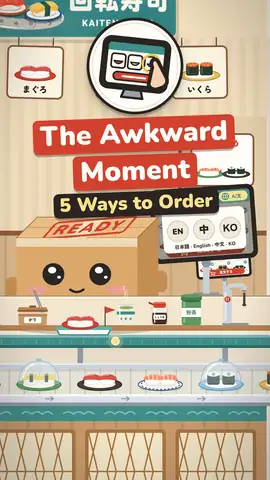
At a conveyor belt sushi restaurant, never put a plate back on the lane, don't lean on the lane or put anything on it, and order what you want on the touch screen instead of waiting for it to pass. When you finish, stack your empty plates at your seat.
Covers: Never put a plate back on the belt · Don't lean on the belt or put anything on it · Order on the screen instead of waiting · Stack your empty plates at your seat
-
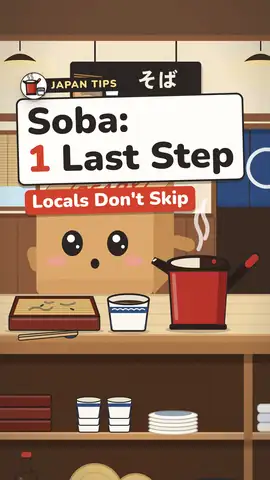
After cold soba, staff often bring a small pitcher of hot soba cooking water called soba-yu. Pour it into your leftover dipping sauce (tsuyu) and drink it as a warm soup. Taste first, because the tsuyu is salty.
Covers: Expect a pot of hot water at the end · Pour it into your leftover dipping sauce · Taste first, then sip it like soup
-
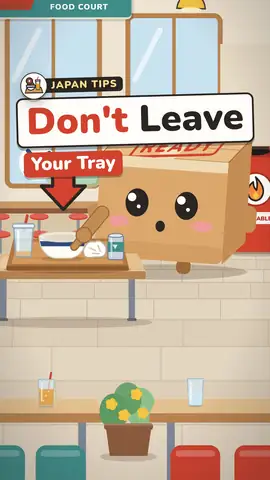
In a Japanese food court you order at the stall you like and take a buzzer. When it buzzes, hand it back and collect your food. When you finish, take your tray to the return area and sort your trash.
Covers: Order at the stall and take a buzzer · Hand the buzzer back to collect your food · Return your tray and sort your trash
-
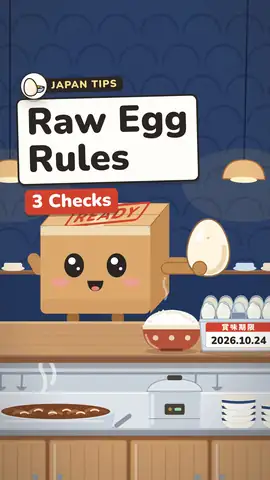
Eggs sold in Japan are routinely eaten raw, for example on rice or as a dip for sukiyaki. Before you crack one, check the best-before date, check the shell for cracks, and crack it right before you eat. If you're not sure, cook it or skip it.
Covers: Check the best-before date · Look for cracks in the shell · Crack it right before you eat
-
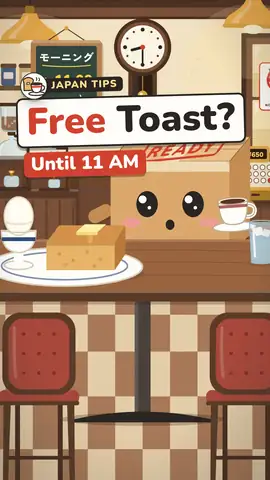
At Komeda's Coffee, a drink ordered from opening until 11:00 comes with a free breakfast of toast (or Robe bread) with a topping and spread. It's called morning service. What you get varies by store, so check the menu.
Covers: Order a drink before 11:00 · The toast set comes free with your drink · Check the menu, since it varies by store
-
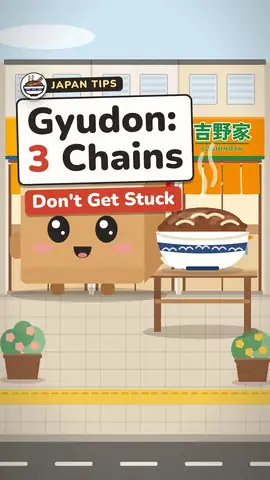
The three big gyudon chains each work differently. At Matsuya you buy a ticket at the machine first, at Sukiya you order on a touch panel at your seat, and at Yoshinoya you order at your seat and pay at the register when you leave.
Covers: Matsuya: buy a ticket first · Sukiya: order on the touch panel · Yoshinoya: order at your seat, pay when you leave
-
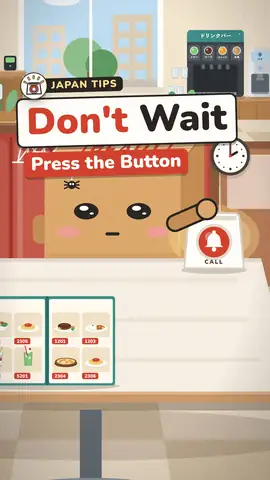
In most table-service restaurants in Japan, staff don't keep checking on you. Say sumimasen (excuse me) or press the call button, expect water to be usually free, and take your bill to the register near the exit when you finish.
Covers: Say sumimasen or press the call button · Water is usually free · Take the bill to the register
-
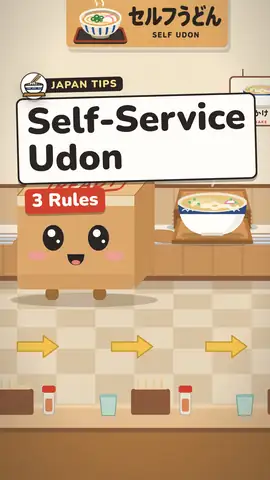
At a Marugame Seimen-style self-service udon shop, take a tray, order your udon at the counter, and pick up tempura before you reach the register. After you pay, add the free toppings and return your tray when you finish.
Covers: Take a tray and order at the counter · Grab tempura before the register · Add free toppings after paying
-
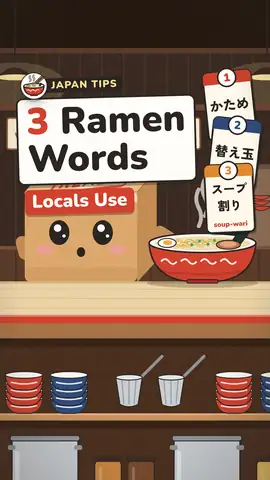
Three words help at ramen shops in Japan. Katame means firm noodles, kaedama is an extra portion of noodles for your leftover soup, and at tsukemen shops you can ask for soup-wari to thin the dipping soup so you can drink it.
Covers: Katame: firm noodles · Kaedama: extra noodles · Soup-wari: thin the tsukemen dip
-
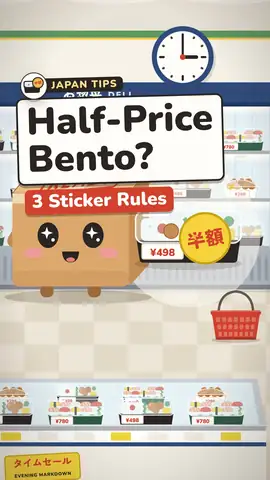
Many Japanese supermarkets put discount stickers on bento and deli packs later in the day, though times vary by store. Hangaku means half price, while a yen-off sticker shows the discount, not the new price. Wait until the sticker is on before you pick, and don't ask staff or hover.
Covers: Stickers come later in the day · Hangaku means half price · Don't ask staff or hover
-
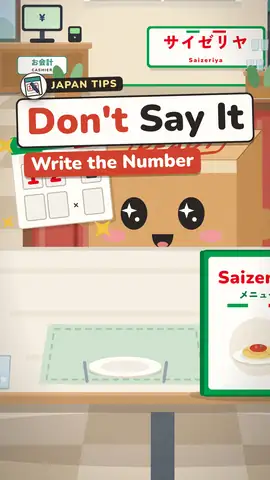
At Saizeriya, the Italian-style family restaurant chain, you don't order by saying the dish name. Every menu item has a number, and you write the numbers on a paper order sheet for staff to read back. Some stores let you order on your phone instead.
Covers: Every dish has a number · Write the numbers on the order sheet · Some stores let you order on your phone · The drink bar has a number too
-
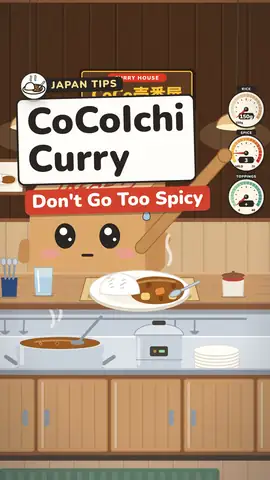
At CoCo Ichibanya (CoCoIchi) you choose a sauce, then your rice amount, spice level and toppings. Start mild if it is your first time, because the spice levels go up to 20. Menu books come in English too, and you can point at the menu numbers.
Covers: Pick your rice amount · Start mild on the spice · Choose your toppings
-
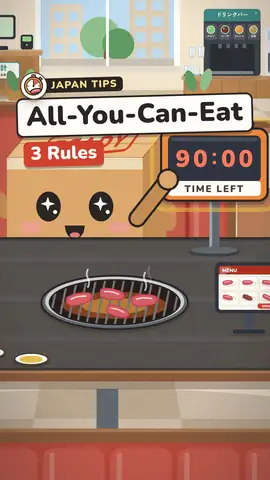
All-you-can-eat plans in Japan usually have a time limit, often ninety minutes or two hours. Last order is called before time is up, and some places charge for leftovers, so order small at first.
Covers: There's a time limit · Ordering stops at last order · Order small at first
-
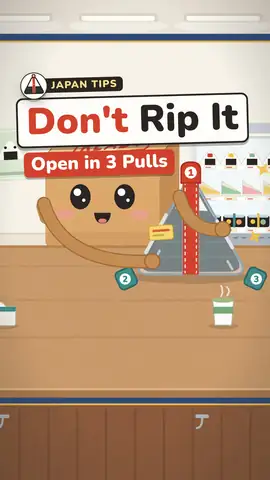
Triangular onigiri come in a multi-part film that keeps the nori (seaweed) away from the rice until you open it. Pull tab 1 down and around, then tab 2 and tab 3 one at a time to the sides, and the seaweed stays in one piece.
Covers: Pull tab 1 down and all the way around · Pull one side of the wrapper off · Pull the other side off
-
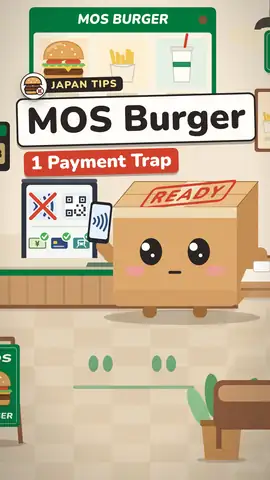
At MOS Burger you order and pay at the counter, take a number and sit down. Everything is made after you order, so waiting is normal. Tap-to-pay and QR codes usually don't work, so bring cash, a card or a transit IC card.
Covers: Order and pay at the counter · Waiting is normal · Skip tap and QR, use cash, card or IC
-
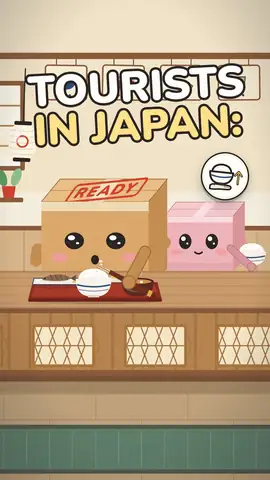
When you eat Japanese food, pick up the rice bowl and the soup bowl and hold them as you eat. Leaving a bowl on the table and leaning down to it is seen as bad manners; there is even a word for it, inugui, "eating like a dog". You do not have to hold a large plate.
Covers: Lift the rice and soup bowls · Do not lean down to the bowl · Big plates stay down
-
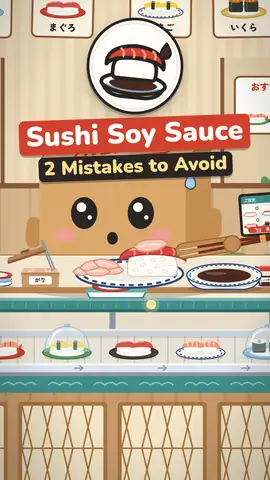
Tip the nigiri so the fish (topping) side touches the soy sauce, just a little, not the rice. The pink ginger is for resetting your taste between pieces, not a topping. Eating nigiri with your hands is fine, as well as using chopsticks.
Covers: Dip the fish side, not the rice · Eat the pink ginger between pieces
-
Japanese restaurants use a handful of ordering systems, and you can usually tell which one from the entrance. Look for a ticket machine, a touch panel, a paper order sheet, staff who take your order, or a self-service tray line.
Covers: Ticket machine by the door · Touch panel at your seat · Paper order sheet · Order from staff, pay at the register · Self-service line
-
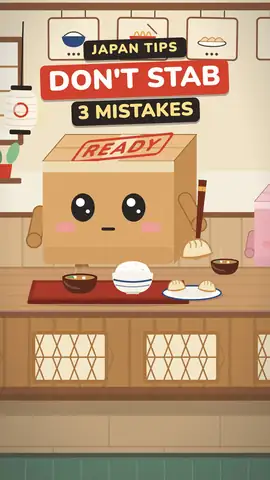
In Japan, chopsticks are not for skewering food, for pointing, or for pulling plates and bowls around the table. JNTO, Japan's national tourism organization, calls sticking chopsticks upright in rice and passing food from chopsticks to chopsticks the two biggest no-no's. When you pick up food, only the top chopstick should move.
Covers: Don't stab your food · Don't point with your chopsticks · Don't pull plates or bowls with them
-
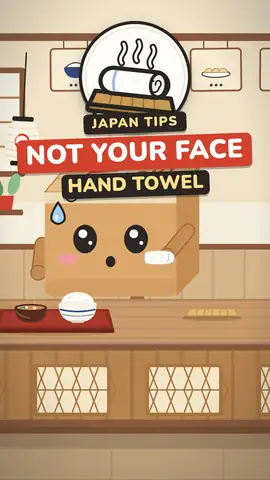
In Japan, the small towel often provided at restaurants, called an oshibori, is for wiping your hands before you eat. Wiping your face with it, tempting as it may be on a hot day, is considered bad manners. When you are done, fold it and place it to the side, or back on the tray if there is one.
Covers: Wipe your hands before eating · Not your face · Fold it and set it aside
Seasonal and regional limited editions are the things you can only buy in Japan. The label words to look for, how convenience stores list new and area-only items each week, and what to know before you take them home.