Chopsticks Taboo in Japan: 3 Rules to Know Before You Eat
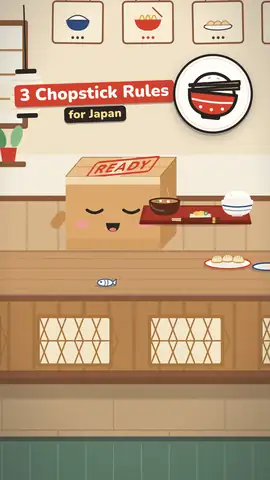
The two main chopstick taboos in Japan are standing chopsticks upright in rice and passing food from one pair of chopsticks to another, since both resemble funeral customs. Rest your chopsticks on a holder called a hashioki instead, and slurping noodles is fine.
 Video out Oct 9
The 22-second video, with Hako. Follow on YouTube to catch it.
The 4 things to know
Don't stand them up in rice
Don't stand your chopsticks up in rice. It looks like a funeral offering. Lay them across the bowl if there is no holder.
Rest them on a hashioki
Rest them on the holder instead. It's called a hashioki.
Don't pass food chopstick to chopstick
Put food on their plate, not from your chopsticks to theirs. Taking food from a shared plate with serving chopsticks is fine.
Slurp noodles, say itadakimasu
Slurping noodles? Totally fine. Before you eat, say 'itadakimasu' (let's eat).
Quick answers
Where should I put my chopsticks when I'm finished?
Rest them on a hashioki (chopstick rest) or lay them across your bowl. Standing them upright in the rice is seen as bad luck.
Is it rude to pass food from chopsticks to chopsticks?
It is considered bad luck because it echoes a funeral ritual, so put the food on the other person's plate instead.
Do I need to say something before and after a meal in Japan?
Say 'itadakimasu' before you eat and 'gochisosama deshita' after you finish, as a thank-you for the meal.
Read the video transcript
Eating in Japan? Three chopstick rules.
One. Don't stand your chopsticks up in rice. It looks like a funeral offering.
Rest them on the holder instead. It's called a hashioki.
Two. Don't pass food from chopsticks to chopsticks. Put it on their plate.
Three. Slurping noodles? Totally fine.
Itadakimasu!
Sources & how we checked
The tips on this page were checked against these official pages:
- japan.travelJNTO - Table Manners in Japan
- japan.travelJNTO - Custom & Manners
- japan.travelJNTO - Japanese Manners Do's and Don'ts
- Updated
- Video
- 22 seconds, made by Ready in Japan
- Good to know
- Rules can vary by place. Follow local signs and staff.
Spotted something that has changed? Tell us in the comments on YouTube. How we make these pages